

ACC’s new CSR roadmap
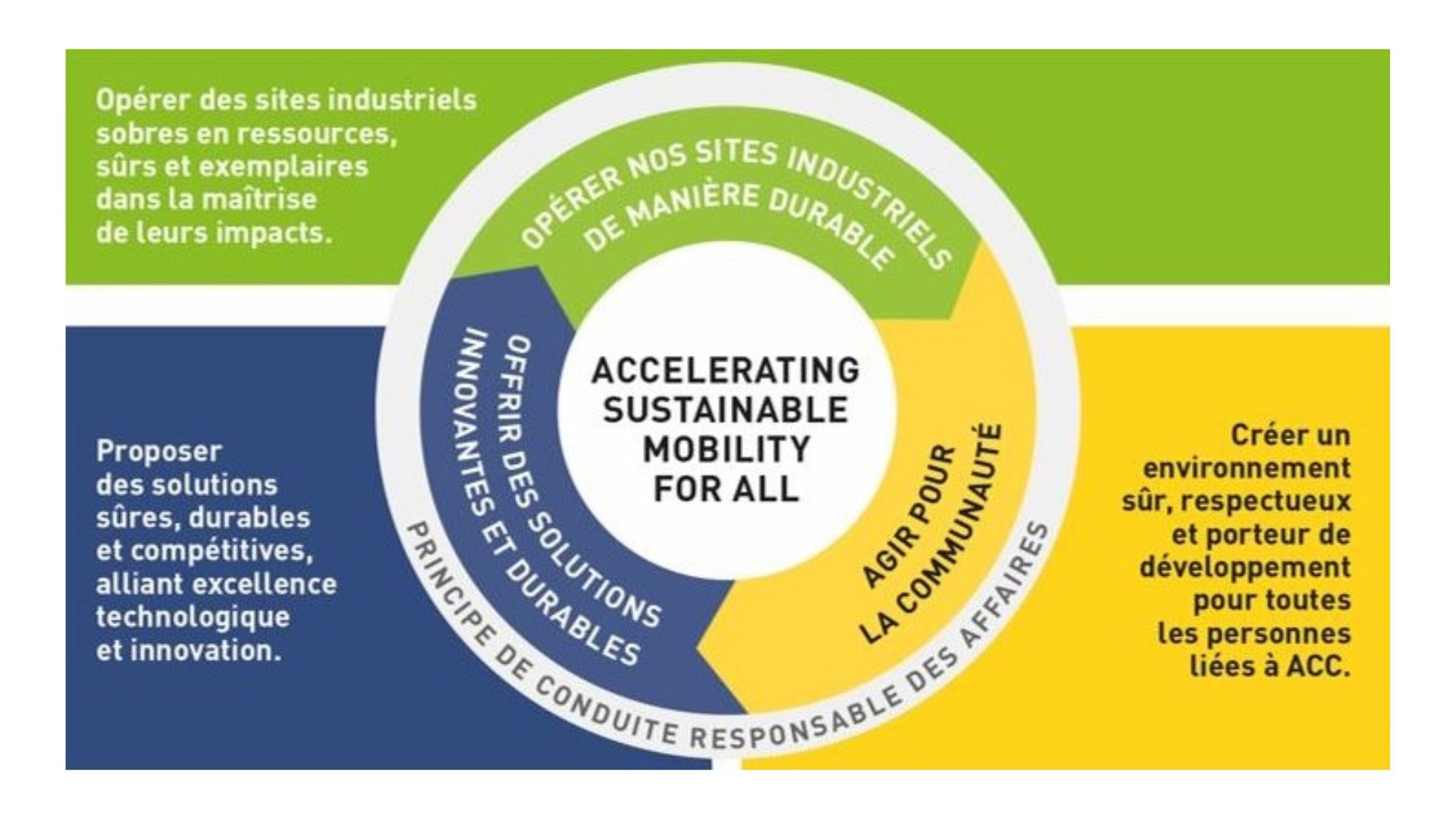
ACC has recently updated its CSR approach and set out its roadmap for the next three years. This is a significant development, taking place against a backdrop of rapid industrial and strategic transformation.
To mark Earth Day and to understand what is changing—and why—we asked Jean Mouro, SVP of Strategy, Partnerships and CSR, a few questions.
“The market is evolving, and so is our company: we are adjusting our course towards our CSR ambition”
Why did you decide to review ACC’s CSR approach?
Since ACC was founded in 2020, market conditions have changed and our product portfolio has taken shape. We are also learning a great deal from the ramp-up of BBD1 and the requirements associated with operating our industrial sites,” explains Jean Mouro. “In this context, we wanted to ensure that CSR remains at the heart of ACC’s strategy, in line with our ambition and our mission. Revisiting our CSR approach, initially established in September 2021 with its four pillars that employees are familiar with, seemed the obvious thing to do. ”
This update also draws on the insights from the double materiality analysis¹, the expectations of our customers and partners, and our commitment to balancing competitiveness and responsibility, with a CSR approach rooted in reality and closely aligned with on-the-ground operations.
This evolution remains true to a commitment that has guided us since the early days of ACC: to embed the principles of responsible conduct at the heart of our corporate strategy, to make CSR a lever for sustainable performance, and to contribute to European industrial sovereignty.
“No, we’re not starting from scratch: we’re clarifying, strengthening and simplifying”
What does this new approach involve? Does it mark a break from the original four pillars?
Not at all. The teams have been working for several months—conducting interviews, running workshops and consulting with sites—to develop the approach further without undermining what has been built up since 2022.
“We first defined four clear objectives, aligned with our ambition and our mission, and consistent with everything we have put in place over the last few years,” explains Jean Mouro.
These four objectives are:
- to provide a safe, respectful and fulfilling working environment,
- to ensure customer satisfaction through competitive, innovative and sustainable solutions;
- to reduce our environmental footprint, particularly in terms of our carbon footprint and responsible resource and waste management;
- to ensure a transparent and responsible supply chain.
Based on these objectives, we have structured our approach around three new pillars, which reflect the maturity the company has achieved whilst remaining faithful to the challenges identified as early as 2021 and further developed since then:
- Acting for the community – a pillar focused on everyone who contributes directly or indirectly to our business: employees, suppliers, subcontractors and local communities. It encompasses safety, skills development, equity, inclusion, social dialogue and respect for human rights.
- Delivering innovative and sustainable solutions – this reflects our commitment to offering high-performance, safe and competitive solutions, serving our customers and the transition towards responsible mobility. It covers the technology roadmap incorporating CSR criteria, co-development with our customers, responsible procurement, reducing our carbon footprint and developing European partnerships.
- Operating our industrial sites sustainably – focused on the responsible operation of our sites: controlled production, best environmental and industrial practices, sustainable resource management (energy, water, waste) and risk prevention.
This change also marks a new phase: through the selected performance indicators, CSR is now integrated into the target agreements and performance plans of the entities with the greatest CSR challenges, and is monitored regularly with the excellence officers to ensure it remains aligned with on-the-ground issues. This collaboration was launched back in 2025 with pilot schemes in Nersac and BBD1.
“A concrete, practical roadmap that is closely monitored”
What does the new 2026–2028 CSR roadmap look like?
It breaks down the three pillars into very concrete actions: upskilling gigafactory operators, both in terms of their roles and in safety and environmental matters; reducing the carbon footprint; QCDP performance of our new products; responsible procurement; sustainable resource management; energy savings; prevention of environmental risks…
“A roadmap is only valuable if it is put into practice every day”
How can we ensure that all this is actually implemented?
The aim: to make CSR a lever for sustainable performance, shared by all teams.
Footnotes
¹ Double materiality analysis: a method derived from the European CSSRD directive on sustainability reporting, which identifies the most significant CSR issues by assessing both their financial impact on the company and the company’s impact on society and the environment.
² ISO 26000: an international standard that provides guidelines for integrating social responsibility into an organisation’s strategy and practices.
